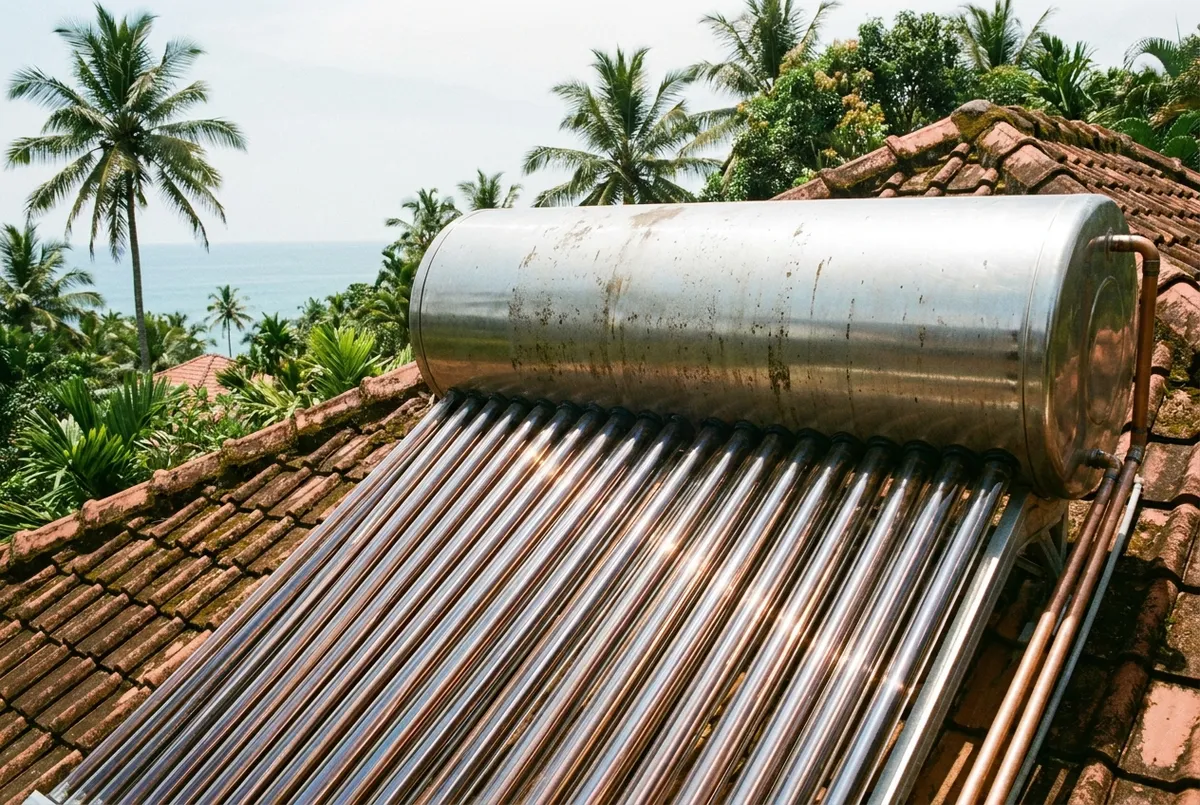
Before anyone spends 65 million rupiah on panels, I often point them at a much smaller number first. Electric water heating quietly takes 15–25% of a typical villa's PLN bill — those instant heaters in every bathroom are 2,000-watt appliances running on the most expensive tariff. Bali sits eight degrees south of the equator; heating water is what our sun does best. A rooftop solar water heater is the simplest renewable device we install: no inverter, no electronics, no PLN paperwork, and payback typically inside three years. It is where I tell most budget-conscious clients to start.
What's Included
Tank & Collector Sizing
150 L suits a couple, 200 L a family of four, 300 L a villa with guest bathrooms. We count bathrooms and habits rather than guessing — an undersized tank means cold showers, an oversized one wastes capital.
Thermosiphon Systems
The classic no-moving-parts setup: collector below tank, water circulates by physics alone. Nothing to break, nothing to power. Our default recommendation for most roofs.
Pressurised & Pumped Systems
For villas with pressure pumps and rain showers, we install pressurised tanks or pumped circulation that hold mains pressure at the tap — no weak hot-water dribble.
Backup Element & Controls
Every system includes an electric backup element on a thermostat and timer for the occasional week of solid rain — it runs only when the sun genuinely has not done the job.
What a Solar Water Heater Saves in Bali
Run the numbers on a family villa: four people showering daily uses roughly 5–7 kWh of electric heating per day, which at PLN's R-2 tariff of IDR 1,699.53 per kWh is IDR 250,000–350,000 a month, more if guests visit. A correctly sized solar water heater takes that to nearly zero for eight to nine months of the year and cuts it sharply even through the wet season. On a 13 million rupiah system, payback lands at two to three years — faster than any photovoltaic option we sell, as the maths in our payback article shows.
Water heaters also combine well with photovoltaics: if you are planning a full panel installation, taking water heating off the electrical load first means you can buy a smaller, cheaper array. We model both together in our system design service. Existing heater playing up instead? We service and repair most rooftop brands too — ask via contact.
How We Work
Count bathrooms on WhatsApp
Tell us bathrooms, household size and whether you have a pressure pump. Photos of the roof help us pick mounting.
Same-day recommendation
We reply with the right tank size, thermosiphon or pressurised, and a fixed installed price.
Installation in one day
Roof mounting, plumbing tie-in, backup element wiring and insulation — a standard install is done between morning and afternoon coffee.
Hot water that evening
We commission the system, set the backup timer, and you shower on sunshine the same night. Tank warranty is five years.
What It Costs
Installed prices: 150 L from IDR 9,500,000, 200 L from IDR 13,000,000, 300 L from IDR 19,000,000 — including mounting, plumbing connection, backup element and commissioning. Pressurised systems add roughly 20%. Full tables on the pricing page.
Frequently Asked Questions
Will I have hot water in the rainy season?
How much maintenance does a solar water heater need?
Is my roof strong enough for the tank?
Solar water heater or heat pump — which is better?
Areas We Cover
Shower on Sunshine
Tell us how many bathrooms you have — we reply the same day with the right system size and a fixed installed price.
Get a Water Heater Quote